Product Updates
From Paperwork to Intelligence
Five places AI does the work on Entitle Guard today, from compliance that writes itself to a receptionist that never misses a call.
By Venki Arunachalam · 23 October 2026 · 7 min read

The handover folder was always a data problem
Every new home leaves the builder with hundreds of documents attached: certificates, manuals, warranties, receipts, inspection reports. For decades that information has lived in folders, inboxes and filing cabinets. Nobody could read it at scale, so nobody could act on it.
That has changed. AI can now read a receipt, classify a certificate, interpret a warranty term and answer a homeowner’s question in plain English. The work that once needed a coordinator, a lawyer and a phone call now happens in seconds.
At Entitle Guard we built the platform around that shift from the start. AI is not a feature we added to a document store. It is the engine that turns paperwork into cover people can see and use.
Australian construction is already leaning in
Australia is ahead of the world on AI in construction. In KPMG’s latest Global Construction Survey, 43.8% of Australian respondents reported using AI at scale, against 24% globally (The Good Builder).
The prize is large. EY modelling released in August 2026 puts the economic boost from AI productivity gains at up to $116 billion by 2036, with construction expected to see the largest increase in full time jobs of any sector (EY).
Yet the same KPMG survey found Australian leaders less confident than their global peers that productivity will improve. Most AI investment has gone into design, estimating and site operations. The period after handover, where defects surface, warranties run out and disputes start, has been largely left alone. That is where we chose to build.
Five places AI does the work today
Entitle Guard runs AI across the whole journey, from the day a project is set up to years after the keys change hands. These are live capabilities, used by builders and trades on the platform now.
1. Compliance that writes itself
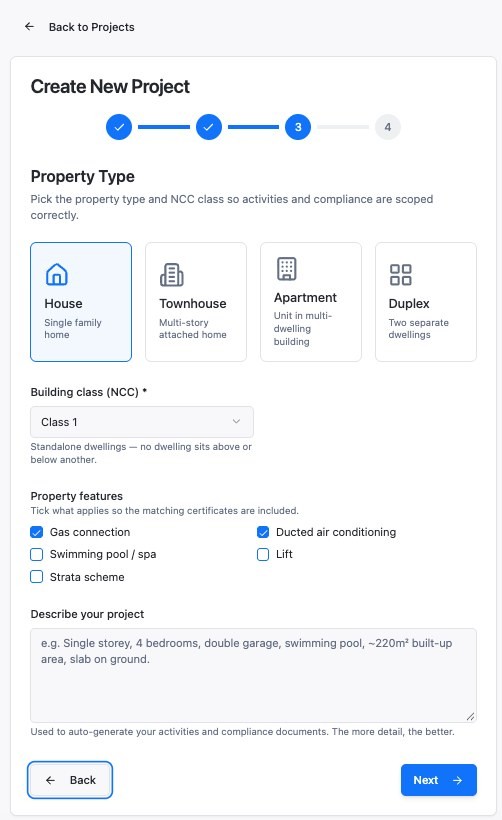
A builder describes the project in a sentence or two: the property type, the building class, whether it has gas, a pool or ducted air. Entitle Guard’s compliance engine turns that into the full list of certificates and documents the build must hand over, matched to the jurisdiction.
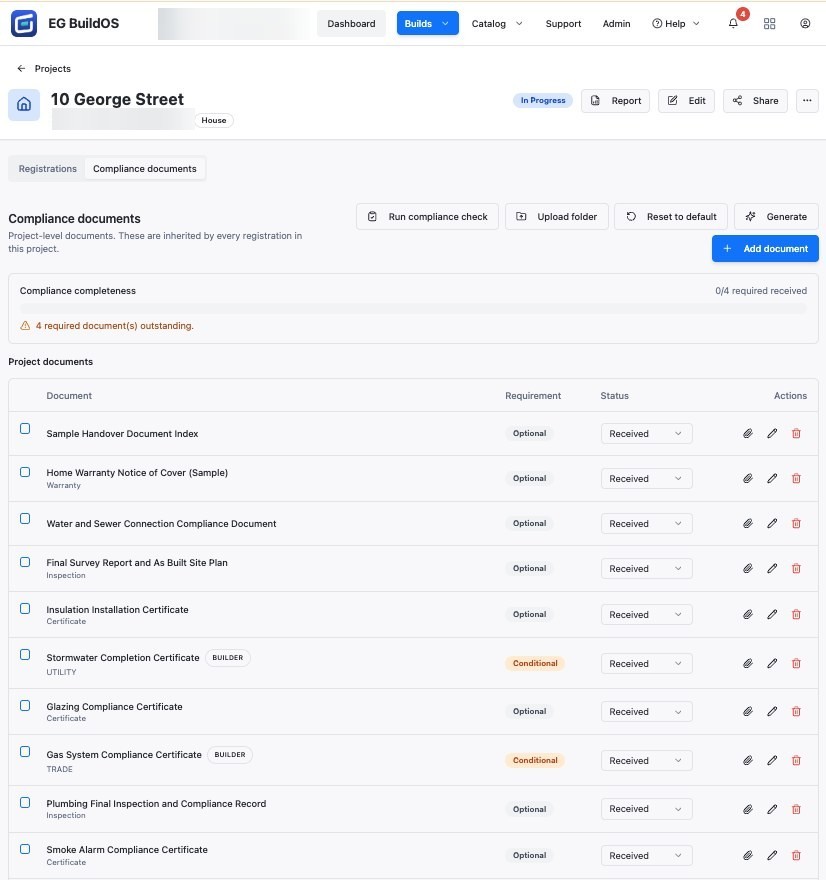
The engine then tracks what has arrived and what is still outstanding, and chases the gaps before handover rather than after.
2. Receipts that become cover
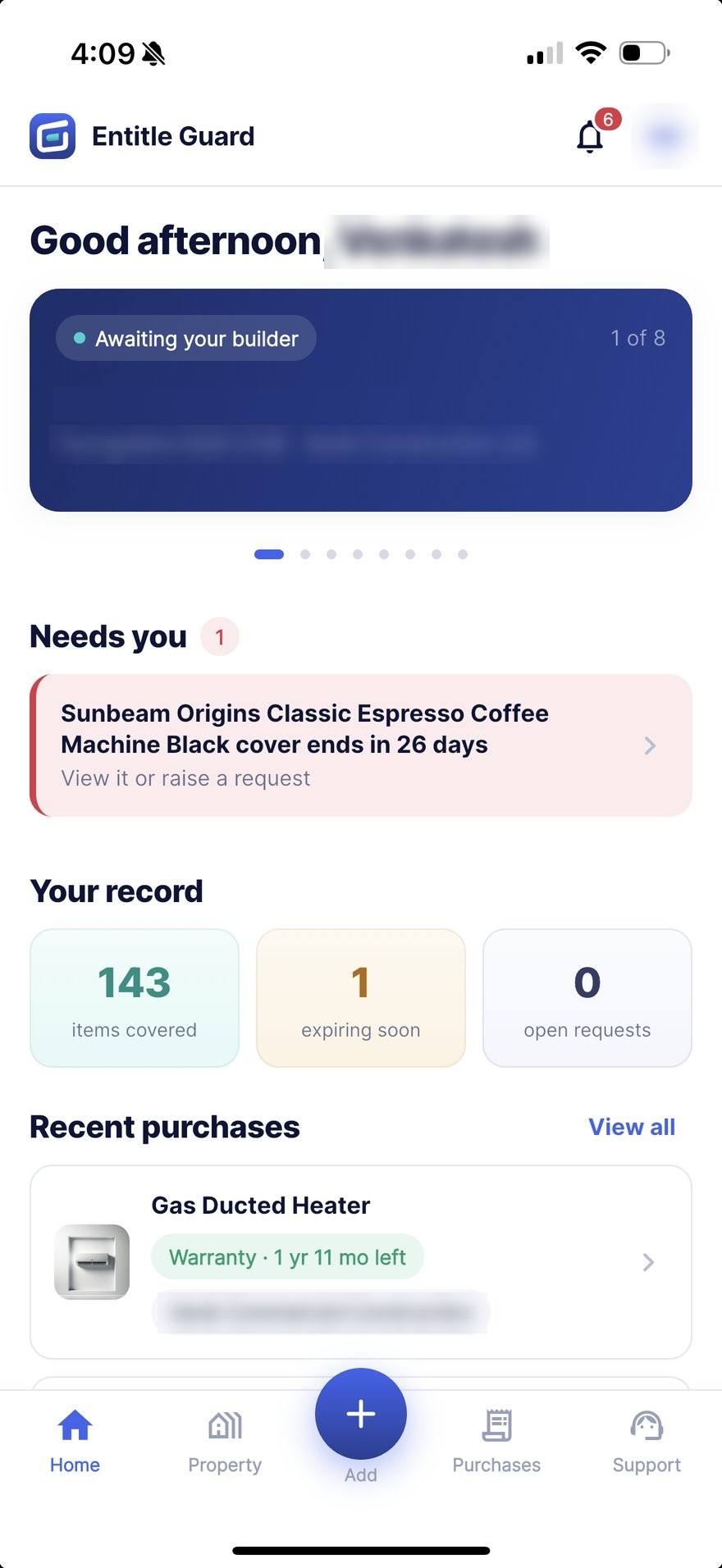
A homeowner photographs a receipt. Our receipt intelligence service reads every line item, identifies the brand and model, and works out the warranty period, including the minimum the Australian Consumer Law implies. The item appears in the owner’s record with its cover clock already running.
3. Every request assessed before anyone picks up the phone
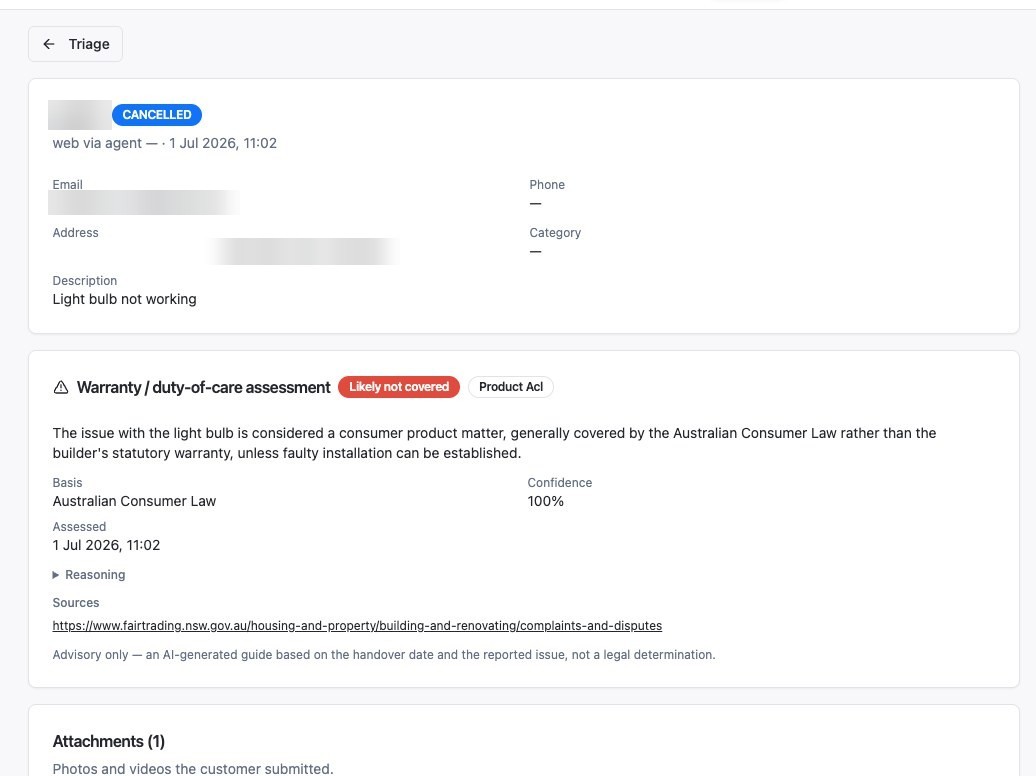
When a homeowner raises an issue, AI assesses it against the handover date, the item and the law. It tells the builder whether the issue likely falls under their statutory warranty or the manufacturer’s obligations under the Australian Consumer Law, and shows its sources. The assessment is advisory, and it saves hours of back and forth on every ticket.
4. Certificates generated for trades
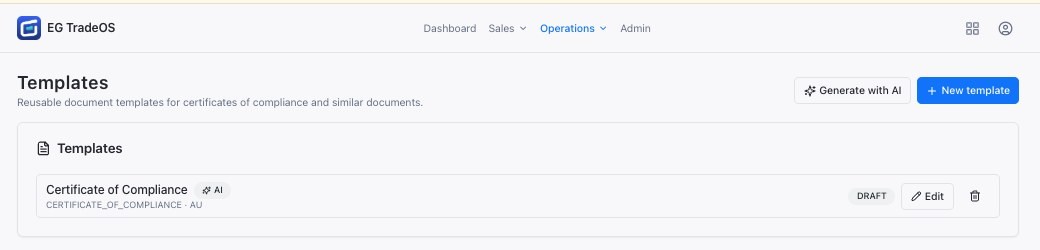
Trades generate certificates of compliance from AI built templates, then sign them digitally on the job. The certificate lands on the property record, so the evidence is there when it is needed years later.
5. A receptionist that never misses a call
Our AI voice receptionist answers calls to a builder’s number, understands the caller’s issue, books or reschedules appointments, and files a ticket straight into the platform with a summary of the call. Homeowners get an answer at 9pm on a Sunday. Builders get a clean ticket on Monday morning.
Underneath all five sits a knowledge layer built on product manuals and warranty documents, so answers come from the actual terms rather than guesswork. A regulatory watch service monitors changes to building and consumer rules and flags what needs to change on the platform.
How it fits together
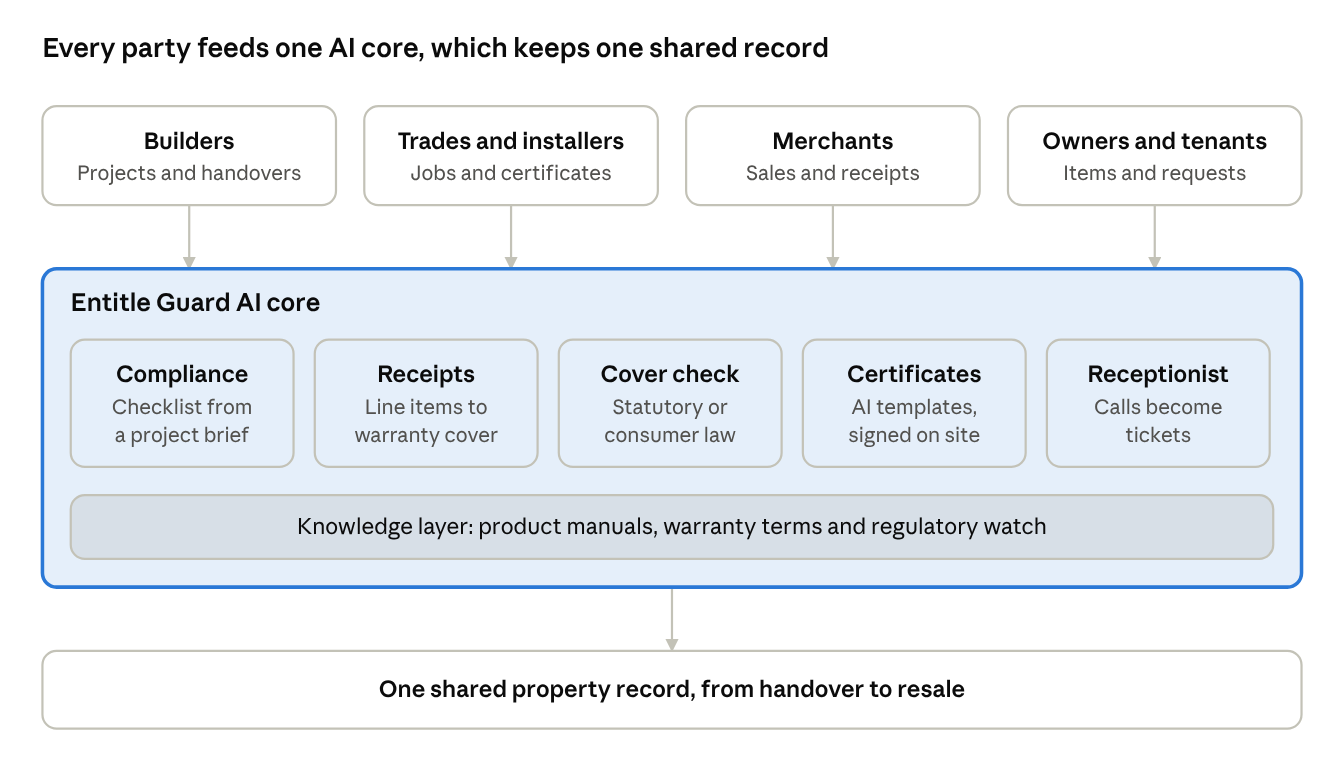
Each party works in its own app, but every action passes through the same AI core and lands on one shared record for the property. The knowledge layer and the regulatory watch sit underneath, so every answer and every checklist reflects the actual documents and the current rules.
What it changes for each party
AI matters here only if it moves an outcome someone cares about. On Entitle Guard, each party gets something concrete.
Builders spend less time chasing certificates and answering the same questions. Requests arrive triaged, with a view on who is responsible. Defects that belong to a trade or a manufacturer go there, instead of being absorbed by the builder.
Trades and installers produce compliance paperwork in minutes, not evenings. Their work is recorded against the property, which protects them when a claim arrives years later.
Homeowners and tenants see what they own and what is covered, without reading a single warranty booklet. They are reminded before cover expires and get an answer when something breaks, even out of hours.
Merchants and manufacturers get verified purchase records and fewer disputed claims, because the receipt, the product and the cover are already matched.
The common thread is time and certainty. Work that used to be manual, slow and contested becomes automatic, fast and documented.
Where it goes from here
The real value of AI in this space compounds over time. Every handover, receipt, certificate and resolved request adds to a structured record of how homes are built, what fails and who fixes it. No folder of paper can do that. A platform that sits across builders, trades, merchants and owners can.
Three directions follow naturally from what we have built:
- From reactive to predictive. With enough history, the platform can flag the items and trades most likely to generate defects, and prompt maintenance before something fails.
- From one market to many. The compliance engine is driven by rules, not hard coded forms. New jurisdictions, segments such as solar and rentals, and new countries become a matter of adding rules and content rather than rebuilding the product.
- From answers to action. Today AI assesses and advises. Next it books the right trade, orders the part and closes the loop, with people approving rather than doing.
Australia leads the world on construction AI adoption, yet the years after handover remain one of the least digitised parts of the industry. That gap is the opportunity. Entitle Guard was built for it, with AI at the core of the platform rather than added on top.
Building the intelligence layer for ownership
The handover folder had its day. What replaces it is a living record that reads itself, knows the law and acts before anyone has to ask.
If you are a builder, trade or installer who wants to see it working, or someone interested in where this platform is heading, we would like to hear from you.
Sources
- The Good Builder: Australia leads the world on construction AI adoption (28 September 2026, citing the KPMG Global Construction Survey)
- EY: AI productivity gains could deliver up to $116bn boost to Australia (August 2026)

Venki Arunachalam
Venki is the founder and CEO of Entitle Guard. He has built and led product teams across the globe for two decades, with a focus on AI and large scale platforms. He started Entitle Guard after one too many lost warranties at home.
The Entitle Guard app
Take Entitle Guard® with you. Free on App Store and Google Play.

